EU GMP Annex 11 Compliance Guide for Pharma Systems
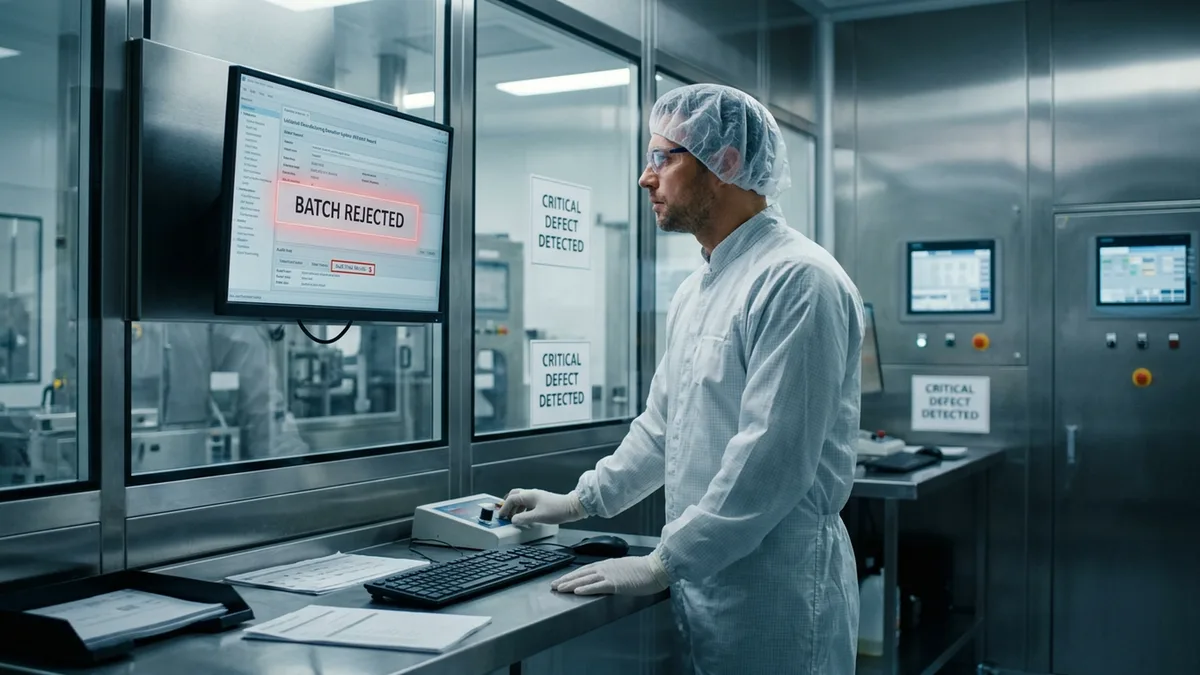
EU GMP Annex 11 defines how computerized systems in EU-regulated pharmaceutical manufacturing must be validated, controlled, and audited so they do not increase patient, product, or data-integrity risk.
Key takeaways
- Annex 11 is risk-based: validation depth must match impact on product quality and data integrity.
- Inspection pressure concentrates on audit trails, access control, and contemporaneous records—not slideware policies.
- Technical controls (NTP, immutable logs, LDAP) must pair with SOPs for review and deviation handling.
- Map Annex 11 clauses to shop-floor systems (SCADA, MES, eBR, LIMS) before buying tools.
- Use a living internal knowledge chain: validation playbook, GxP checklist, and eBR deployment practice.
Regulatory baseline: EudraLex Volume 4, Annex 11 (Computerised Systems). Always re-check the current official revision before a validated change. Related on this site: GxP validation playbook, GxP checklist, validation process guide, eBR validation deployment.
Annex 11 compliant release workflow: the 4-step sequence
A compliant electronic batch release under Annex 11 runs four gates in order — audit trail review, exception clearance, electronic signature, then batch certification. Reordering or skipping a gate breaks the chain that makes the release decision defensible.
| Step | What happens | Clause basis |
|---|---|---|
| 1. Audit trail review | Reviewer checks the audit trail of GMP-critical fields — parameter changes, result edits, out-of-sequence entries — before the release signature. | Annex 11 §9 |
| 2. Exception clearance | Abnormal entries, missing reasons or out-of-role actions become deviations; release must not proceed until each is dispositioned or closed. | Annex 11 §9; PIC/S PI 041-1 §9.6 (review by exception) |
| 3. Electronic signature | Only the authorised person executes the signature; the system re-authenticates, binds the signature permanently to the record version, and stamps it. | Annex 11 §14; §12.1 (access restriction) |
| 4. Batch certification / release | The Qualified Person certifies release in the system; identity and timestamp are recorded and the batch record locks against further change. | Annex 11 §15 |
The clause-level detail of each gate — including ALCOA+ at the point of release — is expanded in the "Annex 11-Compliant Batch Release Workflow" section below.
1. The Core Philosophy of EU GMP Annex 11
Unlike prescriptive standards that dictate exact technical implementations, Annex 11 is a risk-based regulation. It operates on the principle that the validation effort must be proportional to the system's impact on patient safety, product quality, and data integrity.
Annex 11 core pillars (project vs operational)
- Project phase: validation & quality risk management; supplier assessment.
- Operational phase: data integrity & audit trails; security & access control; business continuity.
According to Annex 11, the introduction of a computerized system into a process must not decrease product quality, process control, or quality assurance. There must be no increase in the overall risk of the process.
2. Key Requirements Breakdown for EU GMP Annex 11
Let's look at the critical clauses of Annex 11 and how to technically implement them on the shop floor.
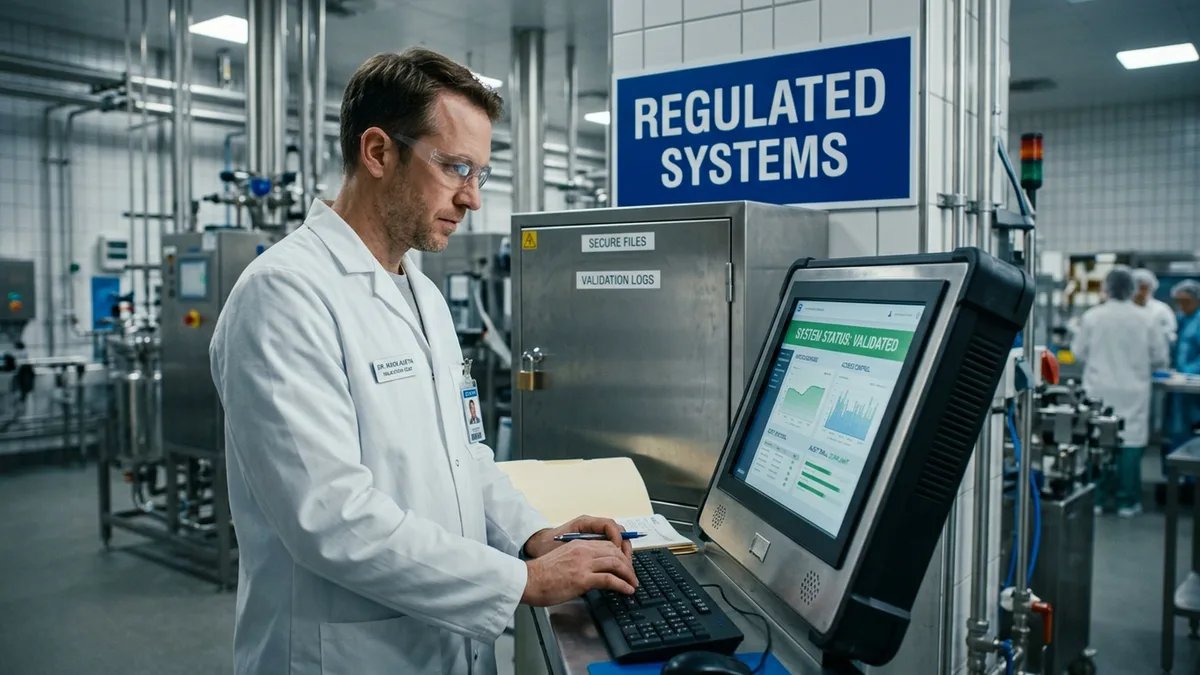
2.1. Validation (Clause 4)
All systems must be validated. The validation documentation should cover the system's entire lifecycle.
2.2. Audit Trails (Clause 9)
The system must create a secure, computer-generated, time-stamped audit trail that records all GMP-relevant changes.
2.3. Security & Access (Clause 12)
Access to systems must be restricted to authorized persons.
Annex 11 Audit Trail Requirements in Practice
Clause 9 of Annex 11 is the primary regulatory text on audit trails for computerized systems. Based on a risk assessment, the system must create a record of all GMP-relevant changes and deletions. For any change or deletion of GMP-relevant data, the reason for the change must also be recorded. The clause further requires that audit trails are available, convertible to a generally intelligible form, and regularly reviewed.
Four elements every audit trail entry must capture (Clause 9):
- Who — the unique user identity that made the change (shared/generic accounts invalidate this)
- What — the original value and the new value for each GMP-relevant field
- When — a computer-generated, time-stamped record (not operator-entered; clock must be NTP-synchronized)
- Why — a mandatory reason code or free-text justification for every post-entry change or deletion
The audit trail must be generated by the system, not by the user. Operators must not be able to disable, edit, or delete audit trail records. This is enforced through the access control layer defined in Clause 12: only system administrators — with change control backing — may modify logging configuration, and that administrative action itself must appear in the audit trail.
Review is a compliance obligation, not optional
The most common Clause 9 finding on inspection is not a missing audit trail — it is an audit trail that exists but is never reviewed. Annex 11 requires review; the frequency and scope must be defined in a site SOP, justified by the system's risk classification. A practical approach used on GMP automation projects:
- GMP-critical systems (eBR, LIMS, MES): sample-based audit trail review as part of batch record review before each release decision.
- Supporting systems (data historians, alarm servers): periodic review on a defined cadence (monthly or quarterly), with evidence retained.
- Trigger review: any deviation, investigation, or out-of-specification event must pull the audit trail for the period in scope.
Evidence of completed reviews — who reviewed, what period was covered, what was found — must be retained and available for inspector examination.
Parallel requirement under 21 CFR Part 11
For sites operating under both EU GMP and FDA oversight, 21 CFR Part 11 §11.10(e) requires the same class of control: secure, computer-generated, time-stamped audit trails that record operator entries and actions creating, modifying, or deleting electronic records. Critically, record changes must not obscure previously recorded information. Audit trail records must be retained for at least as long as the subject electronic records and must be available for agency review and copying. The two frameworks are aligned in intent; a system that meets Clause 9 with proper access controls generally satisfies §11.10(e) on the audit trail dimension.
Annex 11-Compliant Batch Release Workflow
Clause 15 of Annex 11 addresses electronic batch records directly: they are acceptable for batch release provided that appropriate audit trails are in place and the system produces a complete and accurate reproduction of the records. This positions the audit trail — not just the eBR content — as a prerequisite for compliant release, not a background formality.
A compliant release workflow draws on three Annex 11 clauses working together:
Clause 12 — Access control at the release step
Only authorized persons — in EU manufacturing, the Qualified Person (QP) or a specifically designated authorised role — may execute a batch release action in the system. Role assignment for release authorization must be documented, reviewed periodically as part of access review, and any change to the release-authorized role must go through the site change control process. Generic or shared release accounts are a direct Clause 12 violation and make the resulting release signature unattributable.
Clause 14 — Electronic signature at release
If the release action is signed electronically, Clause 14 sets three requirements for the signature:
- It carries the same legal and procedural meaning within the organization as a handwritten signature.
- It is permanently and unbreakably linked to the specific record it signs — the system must not allow a signature to be re-used across unrelated records or applied retrospectively to a different version of the record.
- It includes the date and time of signing, captured by the system (not entered by the user).
The practical implication: the validated system must enforce re-authentication (password confirmation or equivalent) at the moment of signing, must record signing identity and timestamp in the audit trail, and must lock the batch record from further content changes after signature.
Clause 9 — Audit trail review as a release gate
Before the QP or authorized person signs the release, the batch record review must include a structured check of the audit trail for GMP-critical fields — especially any post-entry changes to batch parameters, in-process results, or specifications. The SOP must define:
- Which fields are GMP-critical and therefore require audit trail review.
- What constitutes an acceptable change entry (valid reason code, authorized user, appropriate timing).
- What happens when an entry lacks a reason or was made by a user outside the expected role — a deviation must be opened before release proceeds.
ALCOA+ at the point of release
At the moment of release, the data supporting the decision must satisfy ALCOA+: Attributable (each data point traceable to the person who entered it), Legible, Contemporaneous (recorded at the time of the action, not reconstructed later), Original (not a manual transcription from another system), and Accurate. The completeness and consistency dimensions require that no gaps exist in the batch record and that results transferred from LIMS or instrument systems match the eBR entry — interface reconciliation must be demonstrable.
Practical release workflow sequence (Annex 11 clause map):
- Batch execution complete → eBR locked from operator entry (system-enforced, not SOP-only).
- QA review: audit trail checked for all post-entry changes to critical fields; unexplained changes trigger deviation before release.
- Authorised person (QP or designated role) reviews complete batch record including audit trail.
- Release signature applied (Clause 14): system enforces unique identity, re-authentication, and timestamp.
- System records the release event in the audit trail; batch record archived in immutable storage with retention period defined.
3. Implementation checklist for inspection readiness
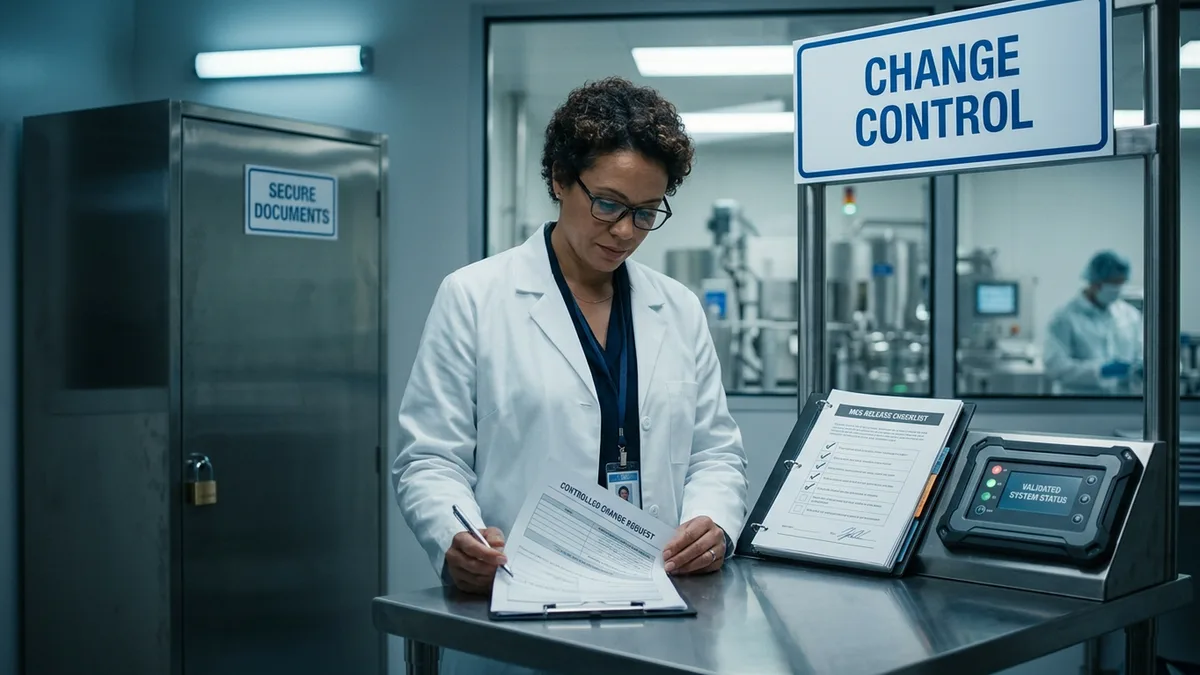
- Classify computerized systems by impact (patient, product, data integrity) and set formality proportionally.
- Complete lifecycle documentation (URS → FS/DS → IQ/OQ/PQ) with supplier assessment evidence.
- Enable immutable audit trails with NTP time sync and define QA review before batch release.
- Enforce unique user identity, role-based access, and periodic access review.
- Prove backup/restore and business continuity for systems that support release decisions.
- Link training records to system roles; re-train after significant configuration changes.
5. Mapping Annex 11 to plant systems (SCADA, MES, eBR, LIMS)
Annex 11 does not name vendors. Inspectors care about functions that influence product quality or release decisions. A practical mapping used on automation projects:
| Plant system | Typical Annex 11 pressure points | Evidence to prepare |
|---|---|---|
| SCADA / HMI | Access control, parameter changes, alarm acknowledgement | User matrix, audit log export, time sync proof |
| MES / eBR | Recipe control, electronic signatures, batch record completeness | Signature meaning matrix, eBR review SOP, deviation workflow |
| LIMS / QMS interfaces | Result transfer integrity, second-person review | Interface specification, reconciliation reports |
| Data historian | Retention, original records, backup/restore | Retention schedule, restore test records |
For Vietnam and regional multi-site programs, keep the same clause mapping while localizing SOPs and language of training records. Architecture should stay vendor-agnostic so validation packages transfer between plants.
6. Failure scenarios seen on real inspections
These are recurring patterns—not theoretical risks:
- Shared generic accounts on HMI: operators use one login for a shift. Audit trail becomes unusable for attribution. Fix: unique IDs + SSO/LDAP where feasible + SOP ban on credential sharing.
- Wall-clock drift between SCADA and eBR: timestamps cannot be correlated during investigation. Fix: plant NTP hierarchy with documented stratum and periodic verification.
- Audit trail “enabled” but not reviewed: system collects logs; QA never samples them before batch release. Fix: risk-based review frequency in SOP with sample records retained.
- Supplier black box: automation vendor cannot produce SDLC evidence. Fix: supplier questionnaire, audit, and contractual right to quality documentation before FAT.
- Change without re-impact assessment: HMI graphics or PLC recipe limits change under “maintenance.” Fix: change control linked to system impact assessment and regression tests.
7. Validation formality proportional to risk
Annex 11 and GAMP 5 both push proportional effort. A standalone temperature display with no release impact does not deserve the same documentation pack as an eBR system that holds the batch record of truth.
- High impact: systems that create, modify, or archive GMP data used for release → full lifecycle, strong audit trail, formal PQ.
- Medium impact: systems that support operations but not primary release decisions → focused testing + interface controls.
- Low impact: tools without GMP decision role → lighter qualification with clear rationale recorded.
Document the rationale. Inspectors challenge missing thinking more than missing templates.
8. Operating model after go-live
Project validation is only half of Annex 11. Operational controls keep the system in a validated state:
- Periodic access review (joiners/movers/leavers).
- Backup restore tests on a defined cadence.
- Deviation handling when audit trail or interface failures occur.
- Periodic review (often 12–24 months) of system fitness for intended use.
- Training refresh when roles or critical workflows change.
Connect these controls to the internal knowledge chain already published on NamPham.net—especially the validation playbook and eBR deployment patterns—so architecture, validation, and shop-floor execution stay aligned.
4. Glossary (inspection language)
- Data integrity (ALCOA+): Attributable, Legible, Contemporaneous, Original, Accurate—plus Complete, Consistent, Enduring, Available.
- Audit trail: Metadata record of who changed what, when, and why—for GMP-relevant data.
- Computerized system: Hardware, software, network, controlled functions, and associated documentation as a whole.
By applying Annex 11 as an architecture and operations discipline—not a one-time document pack—manufacturers reduce inspection risk while keeping automation maintainable on the plant floor.